
The lost paradise of Mallorca
This article was written in Italian and translated into English. Read the original
The invitation
When our friends invited us to their little house in Mallorca, we did not know we would be travelling through time. The small cluster of houses around the cove welcomed us as if it had been waiting for us forever...
The awakening of lost time
Waking up in that silence, a few steps from the sea, was like finding again a part of myself that I thought was lost. The wind that smelled of helichrysum and thyme, the calm sea, and on that little beach, almost deserted - three people at most in the whole day - I went back in time, to when I travelled as a child.
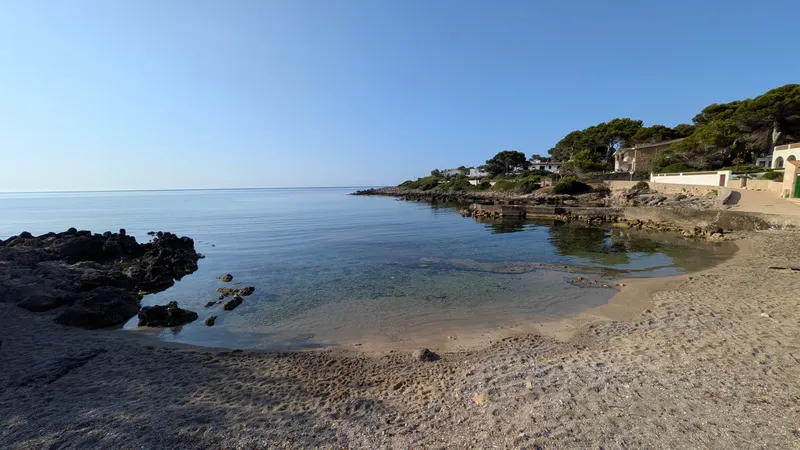
A time when travelling meant discovering, not conquering: we entered new places on tiptoe, almost taking care not to leave even our footprints on the sand: there was respect in that way we moved, with our heads bowed. We wanted to know, not to possess: different cultures, ways of thinking different from ours, habits that surprised us, foods that told stories. Every journey was a passage towards another dimension of being, and I am sure that this enriched us personally.
The beauty of shared time
But in those days in Mallorca I found something more than the nostalgia of the traveller I used to be. I found the forgotten luxury of unhurried time, spent with friends. No distress, no plan other than being together, letting ourselves be lulled by the rhythm of the waves.
The days on the boat discovering coves, new to us but friends of a thousand summers to them, from when they used to reach them along long footpaths, interwove present and past like a kind of dance. In those days memories of my father fishing came back to me, and of him eating sea urchins just gathered (which I, a fussy child, learned to appreciate only years later, when life taught me that the most authentic flavours are often those we initially reject). Spending those days in Mallorca was fantastic, immersed in the sun, with no alarm clocks, with ample breakfasts in the late morning, and lunch that came out of whatever there was, carried onto the boat with care.
And then there was her, the spotless white tablecloth spread on the little table of the boat - a gesture of stubborn civility against the barbarity of hurried consumption. The ice-cold beer just out of the cooler, in a transparent crystal-like plastic glass (not the usual little white plastic cup). In short, every detail was a hymn to delight.
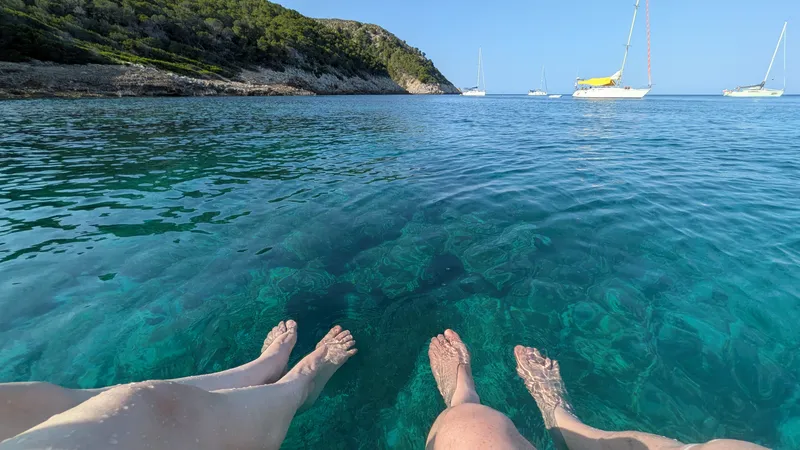
Not to mention the water, which deserves a chapter of its own: a liquid crystal, oscillating between deep blue and impossible turquoise, like when we try to retouch photos on the computer to increase their contrast, cold at exactly the point where torment turns into pleasure... We lived for a few days in a bubble, far from monitors (though not entirely, given our work that gives us no respite), in a present immersed in the past.
The slap of reality
But every paradise has its flaw… from this cove, it was enough to take a winding little road along the sea, which seemed to have been placed there to lead you to explore new coves - to be hurled, in less than three minutes, into a reality that hit us like a slap in the middle of sleep when your mum tells you that you have to go to school. The bubble bursts against a wall of concrete: hotels upon hotels, masses of tourists (mostly German), nightclubs, restaurants that keep only the postcode of the local, loud music drowning out the breath of the sea.
It is a hymn to slovenliness, to cultural flattening, to planned destruction. Far from entering on tiptoe - here it was the native Mallorcans who moved with the caution of ghosts in their own land, careful not to disturb the new conquistadores of mass tourism. People travel for the selfie, for the instagrammable photo, they look for crowded places where the umbrellas touch each other and the swimming pools are identical to those at home. They order industrial food identical to what could be eaten in any corner of the planet, surrounded by compatriots who allow them to keep their own linguistic and cultural bubble intact.
There is no curiosity towards the other, no respect for a language that carries within it centuries of invasions and resistance. They do not try to enrich their knowledge but to impose their own convictions and habits. This is not visiting: it is colonizing.
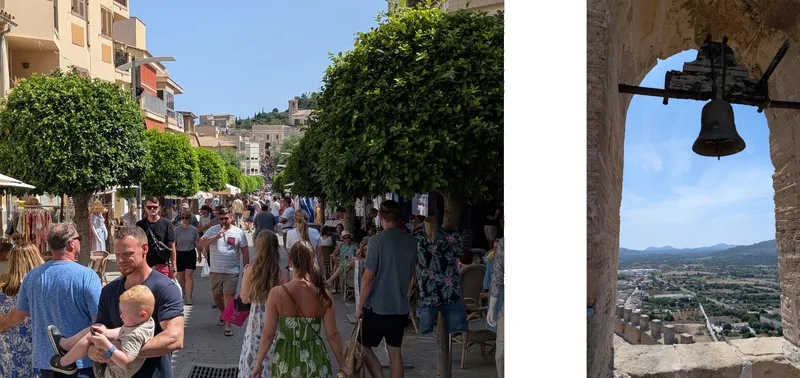
In Artà, a small village in the interior, the scene repeated itself with surgical precision: hordes of hurried tourists crowded into the weekly market, eager to pour euros into stalls selling the same trinkets found in any tourist market. Meanwhile, at the top of the hill, the sanctuary of San Salvador and the church of the Transfiguration of the Lord lay in a deathly silence, forgotten. We reversed the flow: we skipped the market to climb towards the sacred. The tourists did the exact opposite, probably without even noticing that above their heads stood something that had withstood the centuries.
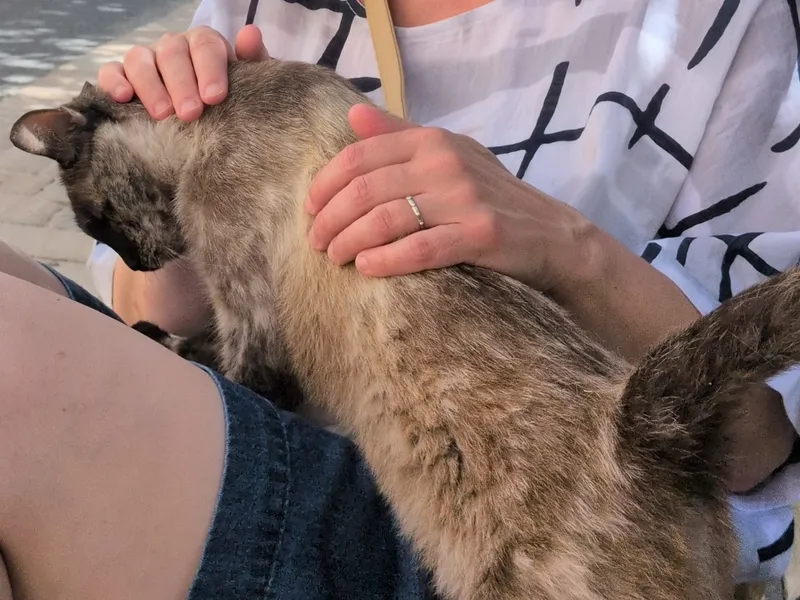
And just as we were making an immense effort, wrapped in torrid heat, a philosophical-looking cat, who was there almost like a guardian, immediately let himself go into cosmic purring as soon as Daniela touched him. He seemed to whisper to us that up there was something worth the effort of the climb under the sun, something that the little human ants of the market were missing forever. And it is not a question of devotion - we ourselves are religious "in our own way" - but of grasping what makes a place unique, different from all the others. This concept, uniqueness, is something we are losing, and it is reflected in other areas as well.
It happened to me during a dinner in those days, for example, to tell how we had planned some holidays with the suggestions of an AI, ChatGPT, only to be answered with "they should be killed". A comment addressed to us and to the conversation I was having directly with this person, but spoken towards other guests, without further explanation - breaking the conversational chain we were holding in direct form. I had to insist to understand such hostility: the person disapproved of the AI's consumption of resources for such "frivolous" things… but instead of opening a dialogue, expressing a constructive criticism, sharing a point of view, they chose total closure. That attitude - which goes beyond rudeness and ends up in lack of respect - is not so different from the predatory approach of tourists who make a clean sweep of the places they visit. Both refuse confrontation, listening, curiosity towards the other. I found this correlation irritating and revealing of a broader trend, and I ended that conversation with a sense of bitterness that still stays with me when I think about it.
The soul for sale
I touched a terrible truth with my own hands: the Mallorcans are not simply welcoming foreigners, they are liquidating their own soul. And I don't think I am exaggerating: I believe that the soul of a people is made of everything their ancestors knew how to create, love and keep - their houses, their language, their silences, the simple flavours of every day. Now all of this is traded for money, to the highest bidder, in the illusion that the money received can buy a happiness greater than the one lost: what a great mistake!
The real value, in my opinion, was instead precisely to preserve that paradise, and let people in on tiptoe. True wealth, for me, is sharing carefree days with friends, respecting the environment that welcomes us. Even more impactful, then, is the imminent construction, in a beautiful pine forest right next to this cove, of a new residential complex with about eighty new buildings. The end of that small bubble of authenticity is written in the concrete that is already being prepared in the building sites. It is arduous, almost heroic, for those who still try to preserve these last shreds of paradise, to carry on their mission against the rising tide of profit. In many respects it reminds me of the degradation of the island of Malta, a place where I lived for almost 10 years, and which I still consider a second home. The same transformation, the same destruction, just with different faces.
But this does not concern only Mallorca or Malta: it is happening everywhere. All the cities and nations that possess unique characteristics are suffering the same fate. Money is upsetting geographical balances, forcing the most rooted and poorest people to leave, to make room for those with more money who are attracted precisely by that uniqueness. And those who arrive from outside often miss a simple truth: those places were that way thanks to those who kept alive the traditions, the flavours, the language, the gestures and the culture of the place. The very same people who are now forced to abandon those places, letting them flatten out and turn into something that, in a short time, will no longer have anything characteristic or unique.
And I don't make it a question of nationality, because what really matters is the ability to preserve the soul of the place where you live. Of course, it is something that requires more effort if you did not grow up there, but it has nothing to do with your nationality. In Rome, for example, there are many "Roman pizza-by-the-slice shops" run by Egyptians, and often their pizza is even more faithful than that made by many Romans.
The bittersweet taste of the end
Anyway, now I understand better the hostility of the friend who invited us towards "touristification". She categorically refuses to travel so as not to become complicit, even involuntarily, in this planetary outrage. Even though I continue to believe, perhaps with naive optimism, that the "how" and "when" of travelling still make a difference. We were tourists, of course, but of another kind - or at least that is what we like to delude ourselves with in our need for absolution.
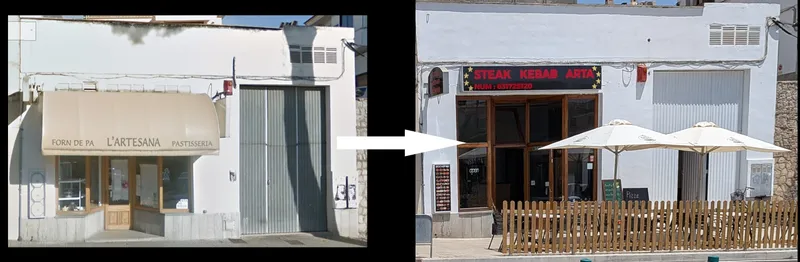
Another deep bitterness we felt when tasting some typical sweets, the "ensaimadas", the original ones made by an old bakery, which have nothing to do with the imitations sold elsewhere, and made with "saim", pork lard (we had fun as amateur philologists tracing the Arabic etymology of the term, paradoxical in a sweet made with pig fat), which I later discovered shares the word with the Sicilian dialect as well ("saimi"). The owner of that bakery said it clearly: when she is no longer around, the bakery will close, because there is no one to hand the art down to. Knowing then that another of the typical bakeries, near Artà, which had resisted for years, has been replaced by a kebab fast food... is emblematic in itself.
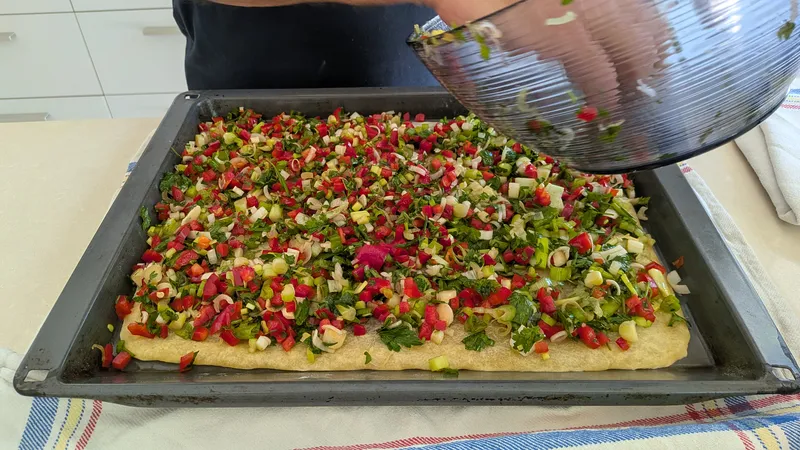
On the other hand, we were lucky enough to learn from our friends how to make two fundamental dishes: one, specifically, from Mallorcan cuisine (the "coca de trampó"), and the other, the famous "tortilla de patatas".
The artificial keepers of memory
And so the joy of having discovered a corner of the past still alive turns into the bitterness of knowing that that temporal bubble has its days numbered. The luck of having been there is tinged with sadness for what it will become.
We are handing all our values, all our memories over to artificial intelligences. Will humanoid androids be the keepers of an era that is disappearing, which in just one generation will no longer have witnesses in flesh and blood?. The world I lived through on my own skin, which marked my neurons with unrepeatable experiences, will remain only as electrical impulses in my brain as long as I live. Then it will become a pattern of voltages in silicon chips, when an AI of the future reads this digital testament of mine and adds it to the thousands of other documents to create "experience" and pass it on to the new young. Androids will become the surrogates of our grandparents, because the biological ones will no longer be carriers of a lost reality: they will have lived the same globalized non-places and known the same interchangeable non-people that already populate our present.
In this dizzying swing between moved gratitude for having been able to still brush against that world and the abyssal sadness for its agony, I find the feeling that accompanied me on the way back. A feeling so intense that it crystallized into a lump in my throat that literally prevented me from uttering even a goodbye to our companions on this journey through time.
The farewell
I cannot help but stand in solidarity with all those who fight not to lose their own paradise: they are the last keepers of a time in which people still knew how to enter on tiptoe, in which travel was transformation and not conquest, in which the soul of a place was worth more than its market price.
Perhaps this is precisely the task of those who still have memory: to tell, to hand down, to resist. Not to stop time, which is a lost battle, but to leave a trace that another way of being in the world existed. And that perhaps, who knows, it could still exist.
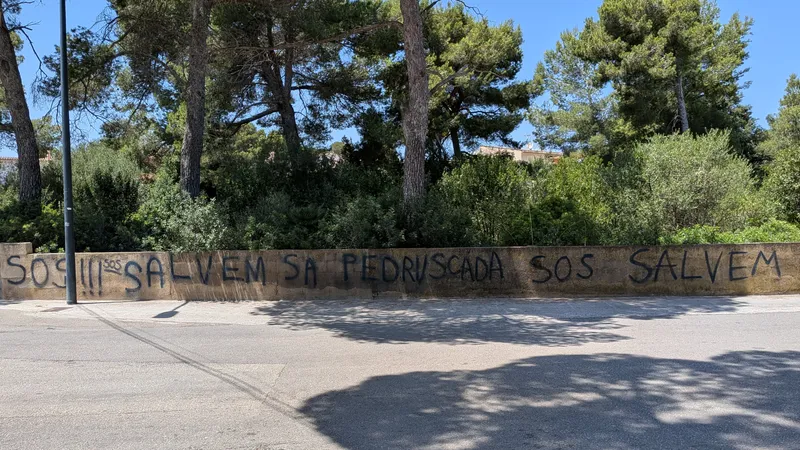
My embrace, solidarity, thanks and bow go to Sa Pedruscada and to all those who are fighting against the new building project.
And a special thank you, whispered like a prayer, to my two friends - beautiful souls who I hope have held out until this last line, and who know they are the secret recipients of this long love letter to a dying world.
If you'd like to talk about it, write to me.
info@bitnrg.com
Comments
Federico
Un mio amico è al suo secondo anno di viaggio in barca a vela fra le isole della Grecia meno visitate, dove il tempo è rimasto quello degli anni 60. In pratica da maggio fino a fine ottobre lui stravive inebriandosi di colori, mare cristallino, musica cicale, odori mediterranei, vento, luce, ossigeno, che lo trasportano in una condizione di completamento, armonia e pace che sono l'essenza dello stare bene, con frequenti accelerazioni/ascensioni verso la felicitá. Quando percorsi la Patagonia in bici mi accorsi che esisteva un altro mondo, quello senza cemento, strade asfaltate, traffico, rumori meccanici, persone in ordine sparso, un mondo caratterizzato dalla forte impronta NATURAle. In quel momento mi resi conto che la nota stonata di quella sinfonia ventosa nella pampa sconfinata ero io, non la natura. Dopo qualche giorno a pedalare mi accorsi che il mio cervello non faceva altro che pensare, ricordare, ragionare, elaborre, era una bufera di neuroni in sinc con la bufera degli elementi intorno a me. Oggi si è persa la capacitá di ragionare, di elaborare, di apprezzare, siamo sempre piú appiatiti verso un modello di (poco) pensiero unico che come hai ben evidenziato sta sempre piú "bovinizzando" l'umanitá. Il pensiero diverso non viene stimolato, stiamo diventando una massa molto (troppo) Tik Tok e sempre meno Tic Tac. L'intelligenza artificiale, che tanti stanno osannando, altro non fará che prendere il posto degli umani e sono preoccupato che in un percorso di rimpiazzo si spingerá, come tutti i programmi basati sull'auto apprendimento, a migliorarsi e liberarsi dei bug di sistema. E i bug saremo noi! Il mio vecchio pensiero sulla piccola comunitá che incarna uno spirito di coesione e condivisione non basato sul like ma sul caffé/birra al bar del centro, la chat in piazza al fresco della brezza serale, la chiacchiera dal negozio di pasticceria, la festa del paese per una ricorrenza o una celebrazione dove il bit lascia spazio al beat, credo possa essere una soluzione; su tutto peró deve prevalere un percorso culturale condiviso, dobbiamo studiare la nostra storia, dobbiamo leggere ragionare e dibattere di filosofia, dobbiamo scorrere meno e soffermarci di piú. Non sono ottimista per le nuove generazioni, ma forse si arriverá a tanti piccoli punti di rottura che faranno crescere la consapevolezza di volersi riappropriare delle proprie vite, non piú sopravvirere, ma cercare di stravivere!
Nephew
Il contrasto tra un luogo tanto incantevole e il suo stravolgimento e declino a causa del turismo di massa mette in luce un problema che va oltre il paesaggio, come hai ben descritto riguarda chi siamo e cosa scegliamo di proteggere. Nell'ultimo decennio, la tecnologia ha trasformato le nostre vite fino a renderle radicalmente diverse. Piattaforme come Airbnb nascono e si affermano in pochi mesi, cambiando non solo il modo di viaggiare ma anche il dna stesso di interi quartieri, la gente che prima supportava l’economia locale diventa una minoranza, sostituita da ondate di turisti sempre più caotiche e sproporzionate. Oggi, grazie a un’app, posso affittare una villa vista mare per un fine settimana, i residenti, invece, restano a guardare case sfitte che aumentano di prezzo e non potendo arrivare a quanto viene richiesto si svuotano centri storici (molto più accentuato quando parliamo di piccoli borghi). Questo cambiamento così rapido ha portato con sé un “gap dei valori” tra generazioni, la generazione più adulta tende a vedere Mallorca come un luogo di ricordi permanenti, radici profonde e relazioni comunitarie consolidate. Per loro, la vita non è un’esperienza da consumare, ma questa visione viene dettata anche da una maturità ed un'esperienza personale. I più giovani vivono in un contesto digitale, orientato alla scoperta continua, alla flessibilità e al “mostrare” esperienze invece che viverle realmente, le storie su Instagram viaggiano più veloci dei sentimenti. La priorità è l’istantaneità più che la durabilità, ed in questo vedo che si perdono i valori che ci sono stati tramandati, io in primis lo vedo con mio figlio, che quando cerco di dargli un'informazione "completa" mi chiede di spiegarla in maniera più semplice. Il risultato? Mah forse stiamo vedendo sgretolare i valori più velocemente di quanto sia successo nelle generazioni passate, questo passaggio sicuramente lascerà un segno molto più forte, la solidarietà verrà sostituita dal profitto, le vere tradizioni di un posto cominceranno a somigliarsi tra loro, ovunque si andrà, come hai scritto, negozi di souvenir identici, menu turistici tutti uguali, eventi creati per i visitatori ma scollegati dalla realtà locale. E' la realtà in cui viviamo, per lo più, e che pian piano stiamo inserendo nella nostra vita, ma per fortuna noi, i più adulti, ancora riusciamo a dare un valore alla "differenza" ed a qualcosa di speciale, tipico, se vogliamo anche vecchio! Dall'altra parte le nuove generazioni, nonostante gli sforzi, vanno ad una velocità che spesso non consente di soffermarsi per apprezzare questa diversità ed unicità di posti, culture e situazioni. Io con mio figlio ci provo e ci proverò … prima o poi mi dirà "Papo, mò basta … scialla!" Ecco lì sbroccherò io!