
They've fooled us again: the problem with technological hoaxes
This article was written in Italian and translated into English. Read the original
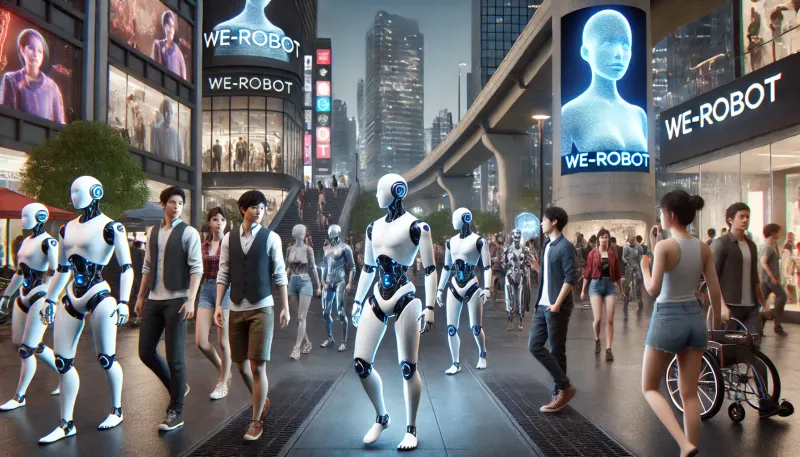
On 10 October 2024 they pulled another prank on us. During one of those events that make your eyes pop, videos appeared showing robots walking among the crowd, talking, interacting as if they were real people. The effect was crazy, it seemed that the future was already here. But there was a small detail they forgot to tell us: it was all fake!!!
Behind this science-fiction scene there were real people, remotely controlling the robots, even if only partially. And the cunning mind behind this diabolical plan is, as always, him, Elon Musk, who already has a certain reputation for this kind of hoax, and who this time outdid himself.
The fact that it is Elon pulling off these stunts no longer surprises anyone, but is it a problem? Well, in my opinion yes, because this time the trick was played on a technology that almost exists, and that is exactly what gets under my skin. If they had staged something blatantly impossible, we would all have had a good laugh. But no, they fooled us about something we know is just around the corner, and this is exactly where I personally get really annoyed.
Why can't we get outraged anymore?
The reaction of the public and of the markets to this farce, in my opinion, was excessively "mild". Only the day after, on 11 October, Tesla shares fell by 10%, a rather modest impact compared to the scale of the event. But the most interesting figure is not so much the reaction of the markets as that of the general public: we are no longer getting outraged.
We live in an age in which the line between reality and fantasy is blurring, and phenomena like deepfakes, conversational AIs and ever more advanced robots make it hard to tell what is true from what is just an illusion. Every time we see a sensational announcement we are ready to believe it, but, at the same time, we are just as ready to find out that there is a trick behind it. This continuous cycle of wonder and disillusionment has made us, in my opinion, less inclined to react. Instead of getting indignant, we passively accept the situation, because it has become the norm, and I don't like that at all.
What happens when the public starts to distrust real technological innovations? If every new technology comes with the doubt that it is just a trick, we risk creating a society that is more and more sceptical and disenchanted about progress. The public might no longer believe what it sees, even when we are facing real technological revolutions... Elon Musk is certainly a master of communication, but there is a thin line between pushing the limits of technology and manipulating public perception. The goal should be to inform and inspire trust, not to generate confusion or disappointment.
The challenge of the future
Technology is advancing at a dizzying pace, and with it expectations and hopes grow too, but the way this future is presented to us plays a fundamental role in our ability to welcome it. Episodes like We-Robot show how easy it is to lose sight of reality, especially when we are so close to reaching it. In the meantime, 10 October will remain a symbolic date: a reminder that progress is measured not only in terms of technology, but also of transparency and honesty. We are all excited to see what the future holds for us, but we would prefer that future to be authentic, and not just a banal piss-take...
If you'd like to talk about it, write to me.
info@bitnrg.com
Comments